Structural Drying in Draper, UT
Structural drying finishes a water loss by treating what the eye cannot see. The Draper crew maps moisture in floors, walls and framing, sets air movers and dehumidifiers and keeps measuring until every reading says dry.
(888) 558-4812Get a moisture map of your Draper home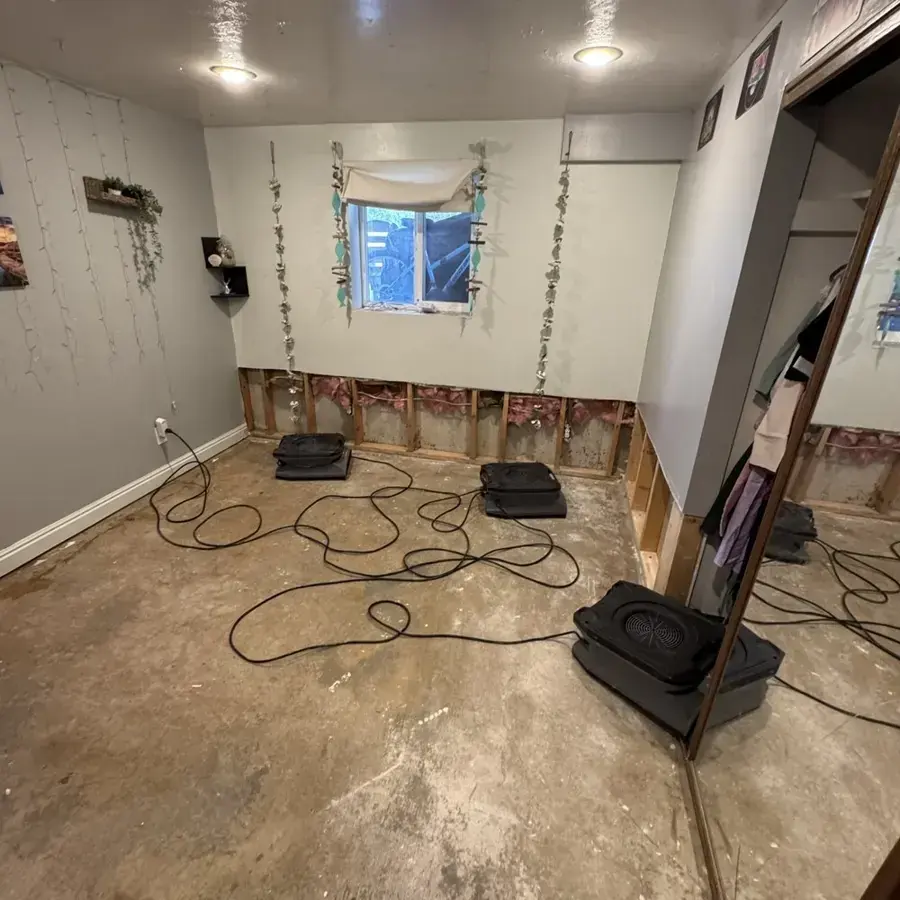
What to do first about structural drying in Draper
Stop new water
Fix or shut off the source first, because drying cannot start while water is still coming in.
Leave walls closed
Do not cut into walls or lift floors yourself, since the crew decides what is opened using meter readings.
Skip the box fans
Household fans and heaters move damp air around without removing moisture from the house.
Photograph, then call
Capture every wet surface and any readings you took, then call the crew before moving contents.
How structural drying is handled in Draper, UT
Map the moisture
Meters and thermal imaging mark every wet material, and a dry reference reading sets the goal.
Engineer the airflow
Air movers and LGR dehumidifiers are placed by room size and wet area, with cavities opened or drilled.
Monitor every visit
Temperature, humidity and moisture content are logged, and equipment is moved or added as needed.
Confirm dry
Equipment comes out only when every material matches its dry reference, and the log is delivered.
What does structural drying cost in Draper, UT?
Structural drying in Draper usually costs $1,200 to $15,000 or more, depending on the drying class, how many rooms or levels are wet and whether specialty drying is needed for hardwood or concrete.
Single room, light class
- Air movers and a dehumidifier
- Readings every visit
- Dry in several days
Whole basement or rooms
- Several dehumidifiers
- Cavity drying in walls
- Psychrometric logs
Deep drying, whole level
- Desiccant or specialty drying
- Hardwood and concrete drying
- Longer equipment runs
These are typical ranges, not a quote. The water category, the square footage, the material class and how fast drying started move the number most. For a closer planning range, run the water damage cost calculator.
Draper homeowners reported snowmelt and groundwater seeping into basements in April 2023, and slow wetting like that can leave concrete, bottom plates and drywall damp long after the surface looks fine.
Structural drying in Draper basements
Drying works only when each step is measured, whether the loss is a basement flooding cleanup or a wet upstairs room:
- Meters and thermal imaging map moisture, and a baseline reading from a dry area sets the target.
- Air movers and LGR dehumidifiers are placed by room volume and wet area, then adjusted as readings fall.
- Wall cavities are drilled or opened so dry air reaches bottom plates and insulation.
Structural drying classes and materials
Class 1 and 2 losses, such as a wet carpeted room, dry with standard equipment. Class 3 and 4 losses, such as wet ceilings or hardwood and concrete that absorbed water deeply, need longer runs and sometimes desiccant or specialty drying. A single room often needs three to four days, and a basement or whole level takes longer.
Structural drying and what the readings mean
Readings are compared with an unaffected reference in the same house, and drying stops only when each material matches it. The log records temperature, humidity and moisture content each visit, which is evidence an adjuster can follow. Federal home energy tips explain how humidity and ventilation affect a house, and EPA indoor moisture information explains why damp materials should not be left to dry on their own. Extraction comes first, as covered under water extraction.
Structural Drying and Dehumidification questions in Draper, UT
How long does structural drying take?
A single room often needs three to four days, while a basement or a Class 4 loss takes longer. The readings decide, not the calendar.
Why so many machines?
Air movers and LGR dehumidifiers are sized to the volume and wet area, and a basement can need several dehumidifiers to keep humidity low enough for materials to release water.
Can hardwood floors be saved?
Often, if they are caught early. Mats or injection drying pull water from boards and subfloor, and cupped boards are re-measured before any sanding or replacement.
What is a Class 4 loss?
A loss where dense materials such as hardwood, plaster or concrete absorbed deep moisture, so it dries slowly and may need desiccant or specialty equipment.
How do I know the house is dry?
Each material is metered and compared with a dry reference from the same house, and the log shows temperature, humidity and moisture content until they match.
Is mold likely if drying is slow?
Mold can begin growing in 24 to 48 hours on wet materials, so drying starts right away and cavities are opened where air cannot reach.
Structural drying across Draper, UT
Structural drying covers ZIP code 84020 across Draper, from the Clover Wood Circle area, Corner Canyon and South Mountain to SunCrest and Traverse Ridge, plus the Draper Peaks area, in both Salt Lake County and Utah County.
The same service nearby: structural drying in Riverton, Bluffdale, Sandy.
Dry means measured
The crew maps the moisture, runs the equipment and delivers the readings log that shows every material reaching its dry reference.