Structural Drying and Dehumidification in Bluffdale, UT
Wet framing and concrete do not dry on their own in a closed Bluffdale basement. The crew sets dehumidifiers and air movers by measured moisture, and daily readings decide when each piece of equipment can come out.
(888) 558-4812Plan Bluffdale drying with readings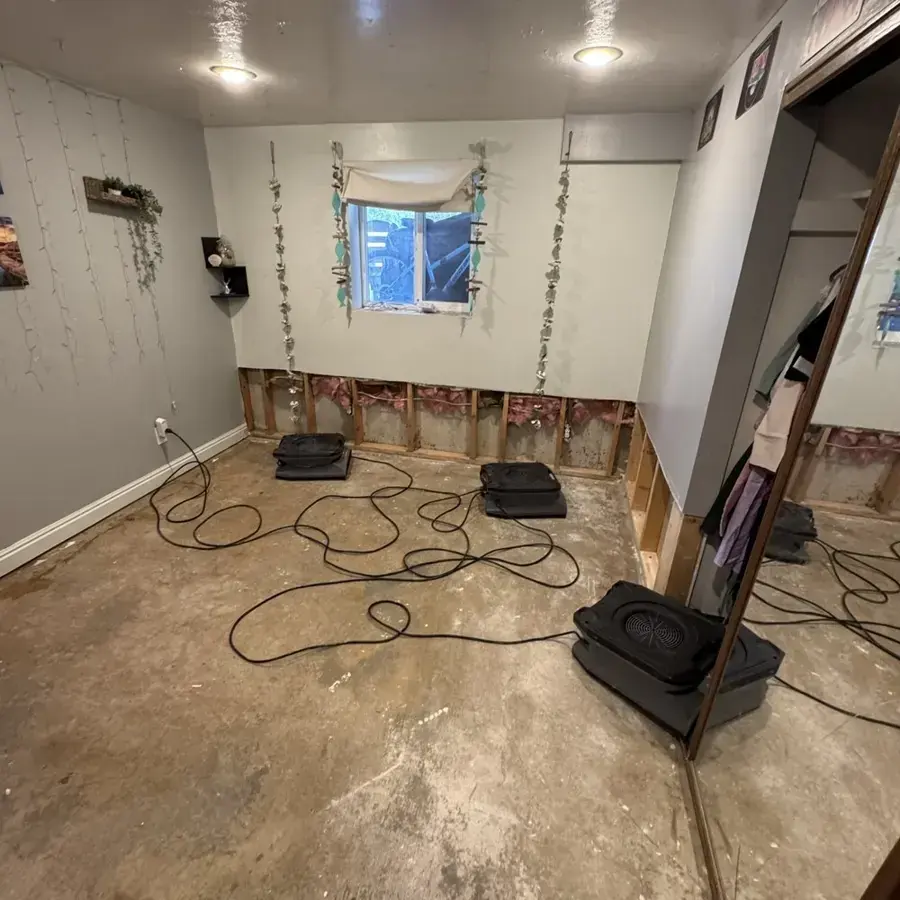
What to do first about structural drying in Bluffdale
Leave equipment on
Keep drying equipment running, and do not unplug dehumidifiers for another appliance.
Close up the space
Keep doors and windows shut in the drying zone so dehumidifiers work on the wet materials.
Keep the heat steady
Hold the thermostat in the range the crew sets, because warm air speeds drying and cold slows it.
Photograph, then call
Photograph the equipment placement and any new wet spots, and call if a reading or a smell changes.
How structural drying is handled in Bluffdale, UT
Measure first
Meters, thermal imaging and a hygrometer record starting moisture and humidity in each affected room.
Extraction
Standing water and soaked pad come out first, so dehumidifiers are not asked to do a pump's work.
Careful removal
Materials that cannot reach the dry standard, like soaked insulation and swollen board, are removed.
Monitor and adjust
Equipment is moved and tuned at each visit, and the log records every reading until all points are dry.
What does structural drying cost in Bluffdale, UT?
One room of light moisture costs $1,200 to $2,800. A basement or several rooms run $2,800 to $8,000, and Class 4 or whole-level drying reaches $7,000 to $15,000+.
One room, Class 1 to 2
- Air movers plus a dehumidifier
- Readings on every visit
- Typically three to four days
Basement or several rooms
- Several dehumidifiers running
- Wall cavities dried
- Psychrometric logs kept
Class 4 or whole level
- Desiccant or specialty equipment
- Hardwood and slab drying
- Longer equipment runs
These are typical ranges, not a quote. The water category, the square footage, the material class and how fast drying started move the number most. For a closer planning range, run the water damage cost calculator.
Structural drying is the long middle of every wet job. After the water is out, moisture still sits in framing, subfloor and concrete, and a measured drying plan is what keeps it from damaging the building later.
Structural drying methods
Which drying method fits depends on the materials and how wet they are:
- Air movers push dry air across floors and walls so surface water evaporates quickly.
- LGR dehumidifiers pull vapor out of the room so the air can keep absorbing moisture.
- Cavity drying drills or opens wall bases so warm, dry air reaches framing and insulation.
Structural drying in Bluffdale basements
Bluffdale sits in a semi-arid region, but that does not keep basements dry after a leak or a flood. In 2024 the City reported saturated soil and high groundwater near the Jordan River, and finished basements here go through a Bluffdale Building Department permit process, so wet framing, insulation and finished surfaces below grade still need measured drying rather than a few fans.
Structural drying logs and the dry standard
Drying follows the IICRC S500 standard: readings are taken at set points on the first visit, equipment is adjusted to the room's drying class and each visit is logged. Class 1 describes light dampness, while Class 4 covers dense materials such as hardwood and concrete. When readings match the dry reference, the equipment leaves and the file goes to the adjuster. See water extraction for the step before drying and the drying time estimator for rough timelines.
Structural Drying and Dehumidification questions in Bluffdale, UT
How long does structural drying take?
Most jobs run several days, and one room of light moisture is often done in three to four days. Heavy basements and dense materials take longer, so readings decide, not a fixed schedule.
What does the drying class mean?
Classes 1 to 4 describe how much moisture the materials hold and how fast it can leave. Class 4 covers dense materials such as hardwood and concrete that need specialty equipment.
Why does a dry-looking basement still need drying?
Concrete, framing and insulation hold moisture that the eye cannot see, and a meter is the only way to find it before finishes go back.
Why are doors and windows kept shut?
Open doors let humid outside air in, so the dehumidifiers work against the weather instead of against the wet materials.
Does a finished basement involve permits after drying?
Rebuilding can involve the Bluffdale Building Department's basement-finish permit process, so owners should ask it before replacing walls and floors.
When does the equipment come out?
When readings at each measured point match the dry reference for the building and the log shows the trend has held. The crew removes equipment at that visit.
Structural drying across Bluffdale, UT
Structural drying runs across Bluffdale, including basements in Spring View Farms, Parry Farms, Sage Estates and Mountain Ridge Estates, and finished spaces anywhere in ZIP 84065. Equipment stays until each room's readings match the dry reference.
The same service nearby: structural drying in Riverton, Draper, Herriman.
Dry the structure properly
Moisture left inside framing and concrete causes trouble long after the water is gone. Bluffdale homeowners can plan the drying and the paperwork together.