Structural Drying & Dehumidification in Riverton, UT
24/7 structural drying in Riverton. The drying team maps the moisture, sizes air movers and LGR dehumidifiers to the class of loss and reads framing, subfloors and concrete every day until they meet the IICRC S500 drying goal.
(888) 558-4812Walls still wet? Call the Riverton drying team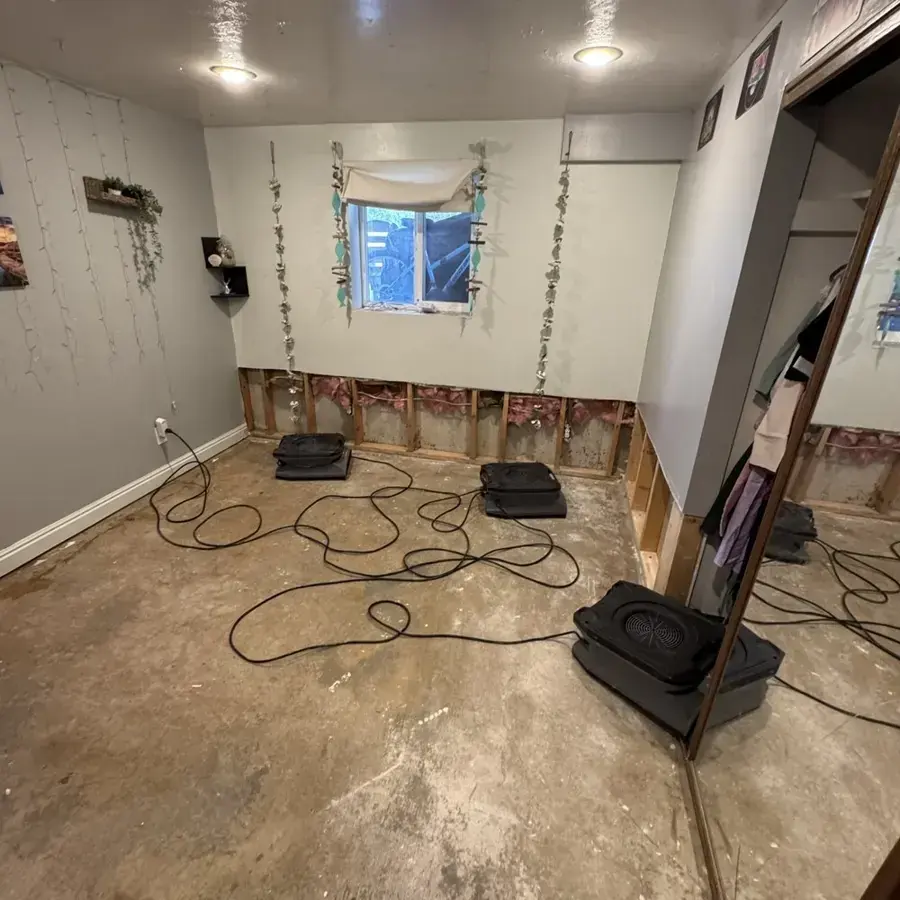
What to do first about structural drying in Riverton
Keep the space closed
Close the windows and doors to the wet rooms so the dehumidifiers control the air.
Leave the equipment running
Air movers and dehumidifiers work around the clock, so keep them on.
Keep the heat steady
A steady indoor temperature helps drying, so leave the thermostat where the drying team sets it.
Let the readings decide
Equipment comes out when the materials read dry, not when the room looks dry.
How structural drying is handled in Riverton, UT
Map the moisture
The tech who does the walkthrough maps wet materials with meters and thermal imaging and sets the class of loss.
Set the drying chamber
Air movers and dehumidifiers are placed for each room's evaporation load, with containment where it helps.
Log the readings
Temperature, humidity and moisture readings are logged every day.
Confirm dry
Equipment comes out when readings meet the goal against a dry reference.
What does structural drying cost in Riverton, UT?
Structural drying in Riverton typically runs $1,200 to $8,000, set mostly by how many pieces of equipment run and for how many days. Class 4 materials like hardwood and concrete take the longest.
One room, Class 1 to 2
- Air movers and one dehumidifier
- Daily readings
- Three to four days typical
Basement or several rooms
- Several dehumidifiers
- Wall cavity drying
- Psychrometric logs
Class 4 or whole level
- Desiccant or specialty drying
- Hardwood and concrete drying
- Longer equipment runs
These are typical ranges, not a quote. The water category, the square footage, the material class and how fast drying started move the number most. For a closer planning range, run the Riverton water damage cost calculator.
Structural drying is what happens after the water is extracted: removing the water still held inside framing, subfloors, drywall and concrete. It is the difference between a room that looks dry and one that reads dry. The drying time estimator gives a rough timeline by material.
Class of loss sets the equipment
- Class 1: a small area with little water absorbed, often one room.
- Class 2: carpet and walls wet up to about two feet, common in Riverton basements.
- Class 3: water from above that soaked ceilings, walls, insulation and carpet.
- Class 4: dense materials like hardwood, plaster and concrete that need low humidity and more time.
Air movers, LGR and desiccants
Air movers sweep wet surfaces to speed evaporation, and their number is set by each room's evaporation load. LGR dehumidifiers pull that moisture out of the air, and desiccant dehumidifiers take over in cold basements or for Class 4 materials. Riverton's dry outdoor air can help at times, so the drying team checks the humidity inside and out before choosing a closed or open drying setup.
Reading to the drying goal
The drying team reads a dry reference material of the same kind in an unaffected room. Equipment comes out when every wet material reads within 2 to 4 points of it, and the daily psychrometric logs go into the claim file. The EPA's mold guidance covers the 24 to 48 hour window for drying wet materials, and the Energy Saver program covers humidity and air sealing at home.
Structural Drying and Dehumidification questions in Riverton, UT
Why not just open the windows and run fans?
Fans move moisture around without removing it. Dehumidifiers take it out of the air, and the drying team uses outside air only when measurements show it will help.
How long does structural drying take?
Most Class 1 and 2 losses dry in three to five days. Hardwood, plaster and concrete can take a week or more.
Why are the dehumidifiers so loud and warm?
They run around the clock and give off heat as they pull water from the air, which also helps drying. The noise ends when the readings say dry.
Can I turn the equipment off at night?
It is best to leave it on. Turning it off lets moisture settle back into the materials and stretches the drying time.
What is a dry reference?
A dry reference is the same kind of material in an unaffected room. It gives the drying team a target reading for each wet material.
Is structural drying part of an insurance claim?
Mitigation, including drying, is often part of a covered water claim, and the daily logs support it. Coverage depends on your policy, so check with your own insurer.
Structural drying across Riverton, UT
Riverton Water Damage Restoration covers ZIP 84065, from Central Riverton near City Park and the Jordan River bottoms on the east side to the Midas Creek and Rose Creek neighborhoods, Monarch Meadows and Western Springs out toward the Mountain View Corridor.
Nearby coverage reaches Bluffdale, South Jordan, Herriman, Draper, Sandy and West Jordan.
Water damage in Riverton still drying?
The drying team maps the moisture, runs the right equipment and reads every material until it meets the IICRC S500 goal.