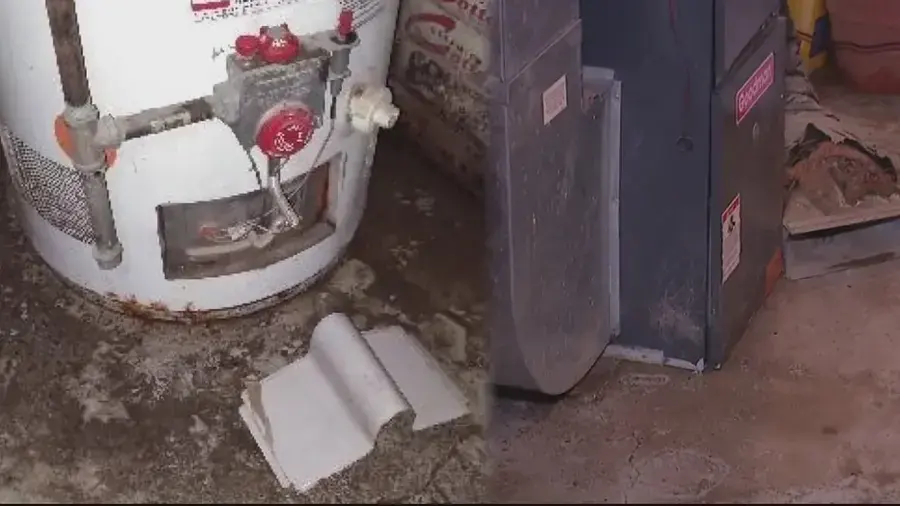
A water heater tank that fails can put a closet, a garage or a utility room under water before anyone notices. In South Jordan a new tank also needs a permit, so the cleanup and the replacement are planned together.
Key takeaways
- The City building FAQ says a permit is required for a new water heater or furnace.
- The Building Department lists the 2021 International Residential Code and the 2024 International Plumbing Code among the codes in use.
- A leaking tank is replaced, not repaired, and the water already on the floor needs extraction and drying either way.
- About 19 percent of occupied South Jordan homes are rented, so a landlord may own the tank and decide on its replacement.
- Where the tank sits decides where the water goes: a closet sends it into wall framing, a garage spreads it across the floor and a basement room sends it toward carpet and drains.
How a water heater tank fails
Tank failures usually start inside. The steel is lined to protect it from rust, and over time the lining wears and small cracks let water seep through.
As a seam or a fitting weakens, a weep becomes a stream, and the whole space around the tank gets wet. Age raises the odds, and a failure can come with little warning.
The City lists its water as hard, at 7 to 10 grains per gallon, but the cause of any one failure is a plumber's call once the tank is opened.
- A relief valve that drips or weeps.
- Rust stains at the base or along the seams.
- A tank that rumbles or pops while heating.
- A damp floor around the base, even in a small spot.
- Water at a connection: a loose or corroded fitting can leak even when the tank is sound.
Where the water goes
The same failure does different damage depending on where the tank stands.
A closet or utility room
Water runs under the door, soaks the walls from the base up and moves into the neighboring rooms. Drywall and baseboards take it first.
A closet tank is the hardest to read, because the wet wall is behind a door and the floor of the closet may look dry for a while.
A garage
Water spreads across the garage floor toward the lowest point, which is often the door. Stored boxes and cardboard on the floor soak through quickly.
The wall shared with the house can wick water into the framing, so the first room inside that wall gets checked too.
A basement
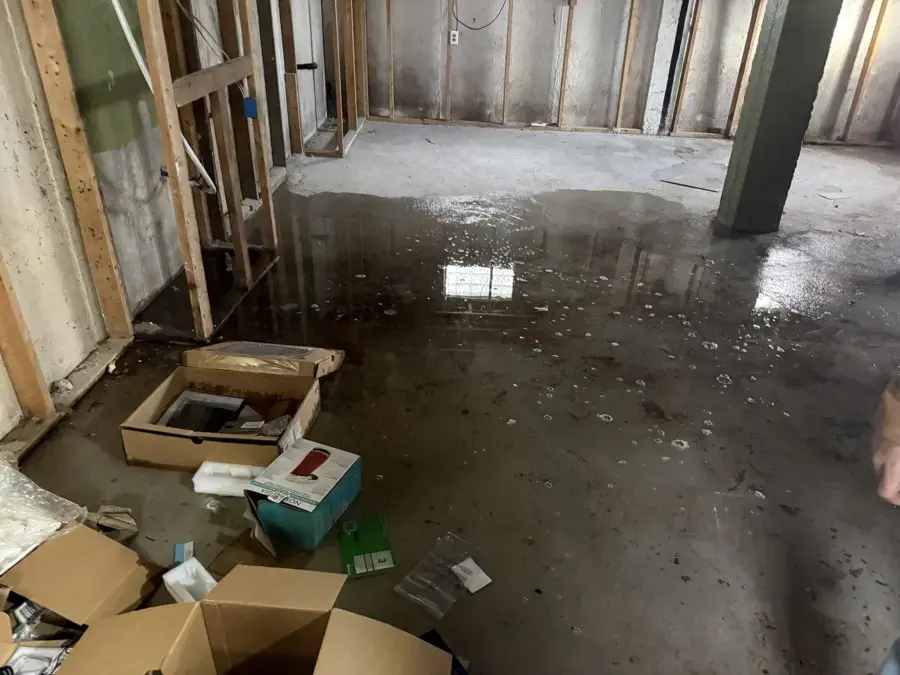
Water heads for carpet, boxes on the floor and the lower drywall, and it pools where the floor dips. A finished basement hides the spread behind the walls.
The permit step for a replacement tank
The City building FAQ says a permit is required for a new water heater or furnace in South Jordan. The Building Department also lists the 2021 International Residential Code and the 2024 International Plumbing Code among the codes in use.
Because the permit goes with the new tank, the replacement belongs in the same plan as the cleanup. The Building Department can say what the permit involves for a specific address.
A replacement is also a chance to look at what failed. The shutoff valve, the supply connections and the space around the tank are worth a second look before the new tank goes in.
- Installer: ask whether the permit will be pulled before the old tank comes out.
- Paperwork: keep the permit records with the cleanup records.
- Questions: take any unclear step to the Building Department.
The first steps after a tank lets go
A leaking tank leaves little time, and the order matters. Cutting the supply stops new water, while the water already out still needs removing.
- Water: shut off the cold supply valve to the tank.
- Power or gas: turn off the breaker for an electric tank or the gas valve for a gas one.
- Safety: stay out of standing water near outlets or the panel.
- Photographs: capture the tank, the water and the damage.
- Contents: move belongings off the wet floor.
- Extraction: call before the water reaches carpet and framing.
A slow leak is still a leak
A weeping valve or a damp base gives more time, not unlimited time. Photograph it, dry the area and call a plumber before a seep becomes a failure.
Extraction, drying and what gets removed
The first job is pulling the standing water off the floor. Water extraction comes before anything else, and the crew then checks walls and floors with moisture meters and thermal imaging.
A water heater leak cleanup ends with readings, not with the first dry-looking day. Structural drying keeps air movers and dehumidifiers running until the framing and concrete match a dry reference.
- Drywall: lower sections that stay wet are cut out.
- Insulation: soaked insulation behind or under the tank is removed.
- Flooring: vinyl, tile or laminate may be lifted so the subfloor can dry.
- Framing and concrete: dried in place and checked with daily readings.
Rentals, shared walls and who to tell
About 19 percent of occupied homes are rented, so the tank may belong to a landlord. About 14 percent of the city's housing units are in buildings with two or more units, and 1,629 are in buildings of 50 or more units.
In a shared building, a tank leak can reach a neighbor's ceiling or wall. Telling the landlord or property manager early keeps the dry-out and the replacement on one schedule.
That makes a leak in one unit a question for the neighbors as well as the owner, and the drying crew checks the shared walls and the ceiling below before it calls the job finished.
Preventing the next failure
A tank that is checked a few times a year gives more warning than one that is ignored. The South Jordan water damage restoration pages cover the other services.
- Look: check the base of the tank and the relief valve now and then.
- Mark: tag the shutoff valve so anyone in the house can find it.
- Plan: schedule the replacement when the tank is old instead of waiting for a leak.
- Protect: a drain pan or a water sensor under the tank gives early notice where a leak would reach finished space.
Questions
Does South Jordan require a permit for a new water heater?
Yes. The City building FAQ says a permit is required for a new water heater or furnace.
Can a leaking tank be repaired?
A tank that leaks from the shell or a seam is replaced. A leak at a fitting or a valve is a plumber's call.
Should the cleanup wait until the new tank is in?
No. The water on the floor and in the walls needs extraction and drying right away, and the replacement can follow. Waiting for the new tank leaves wet drywall and framing to sit.
How is water behind a closet wall found?
Moisture meters and thermal imaging show wet drywall without opening it, and small test openings confirm what they show.
What if the tank is in a rented home or condo?
Tell the landlord or property manager early. A leak can reach a neighbor in a shared building, and about 19 percent of occupied homes here are rented.
What do the building codes have to do with a replacement?
The Building Department lists the 2021 International Residential Code and the 2024 International Plumbing Code among the codes in use, and the permit goes with the replacement. The department can say what applies to a specific install.