A sewage backup in a Sandy basement raises a question before any cleanup starts: which district serves the address? Sandy has two, and the answer decides who checks the main.
Key takeaways
- Sandy Suburban Improvement District serves most of the city, and Jordan Basin Improvement District serves the southern portion.
- Jordan Basin was called South Valley Sewer District until it was renamed in June 2024, so older paperwork may carry the old name.
- The larger district says a sewer lateral, the pipe from a house to the main, is privately owned and has always been the homeowner's responsibility to fix.
- Its Sewer Lateral Program, begun October 1, 2014, pays for repair, maintenance or replacement of a faulty lateral for many causes, but not earthquakes.
- It asks owners with a backup to call the district first, and its crew checks whether the main or the lateral is the cause.
Why the district comes first
The city's Public Utilities department delivers drinking water to most of the city and manages flood control and stormwater. Sewage is a separate system, run by sewer districts.
Sandy Suburban Improvement District provides sewer collection for a majority of the city, a small area of Midvale City and some unincorporated Salt Lake County areas. It sends its wastewater to the South Valley Water Reclamation Facility in West Jordan.
Jordan Basin Improvement District handles wastewater collection and treatment for the southern portion of the city, along with Bluffdale, Draper, Riverton, South Jordan, Herriman and other areas.
A name change can confuse a search. Documents from before June 2024 use the old name, South Valley Sewer District, for the same district.
- Most of the city: the larger district.
- The southern portion: Jordan Basin.
- Older paperwork: South Valley Sewer District is the former name of Jordan Basin, renamed in June 2024.
Telling a house problem from a main problem
Jordan Basin says that when a backup comes from the house plumbing or the private service pipe, turning off all water use will generally stop it. It also says water standing in the cleanout means the blockage is most likely between the house and the main.
A cleanout is a capped opening in the private sewer pipe that gives access for clearing a blockage.
Those are Jordan Basin's statements for its own area. For an address served by the larger district, that district asks owners to call it first, and its crew checks whether the cause is the main or the lateral.
- Stop all water use: no toilets, showers, washers or dishwashers while the cause is unclear.
- Look at the cleanout: water standing in it points to a blockage between the house and the main, according to Jordan Basin.
- Note the pattern: a floor drain only, or toilets and showers too.
- Call the district for the address, then call for cleanup of what has already come up.
If the district finds the problem in its main
- Tell the cleanup crew, so the record shows where the blockage was.
- Keep the district's notes and the date of the visit.
- Keep water use stopped until the district says the main is clear.
The Sewer Lateral Program
The larger district says a lateral is privately owned and has always been the homeowner's responsibility to fix. Its Sewer Lateral Program, which began October 1, 2014, pays for repair, maintenance or replacement of a faulty lateral.
The program covers many causes, including improper maintenance or construction and floods, landslides and sinkholes, but not earthquakes.
The program belongs to that district, so it applies to addresses in its area. Homes in the southern portion are served by a different district, so the program may not apply there, and Jordan Basin is the one to ask.
- Service area: does the district serve the address?
- Program: does the Sewer Lateral Program apply to this address?
- Scope: what does it cover for this kind of failure?
- Records: what should be documented before repairs start?
Sewage is Category 3 from the first moment
Sewage that backs up into a home is Category 3 water the moment it happens. It carries bacteria and other contamination, so the cleanup differs from a water leak.
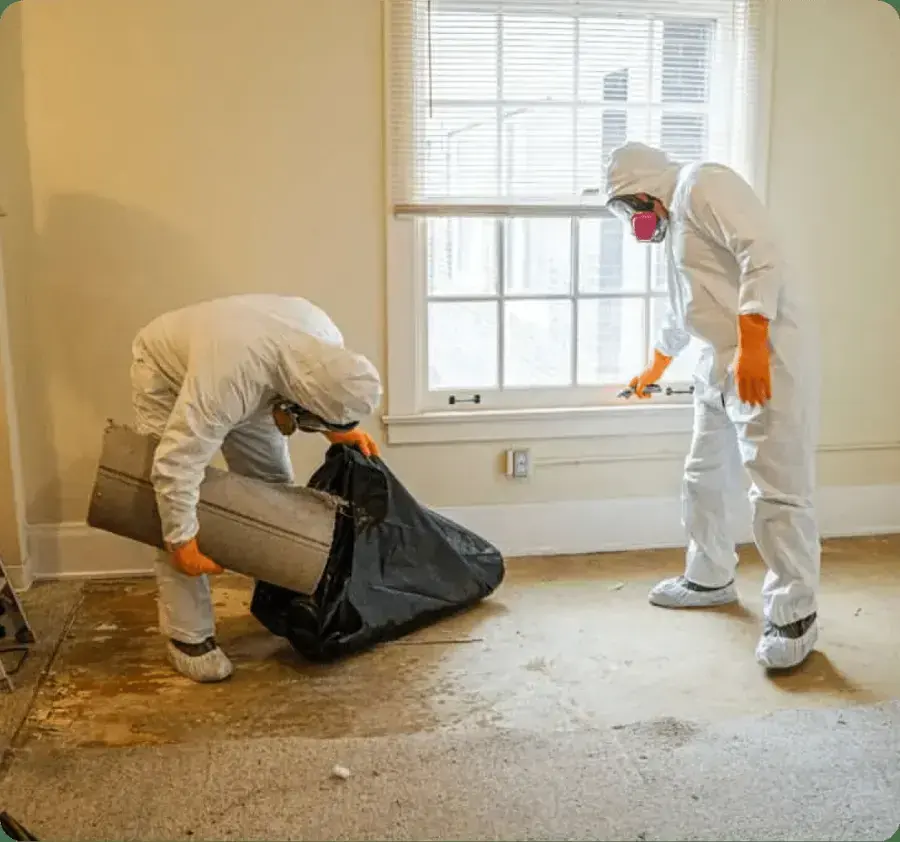
Crews wear protective suits and respirators, and containment keeps the work area separate from the rest of the house. Sewage backup cleanup follows that routine from the first bag of removed material to the final cleaning.
- Protect: suits, gloves and respirators for the crew, and people and pets stay out.
- Contain: plastic barriers keep the work area closed off.
- Extract: standing sewage is pumped out first.
- Remove: porous materials that touched it are bagged and taken out.
What gets removed and what is cleaned
A backup that reaches a finished basement is also a basement flooding cleanup, because drying starts as soon as the sewage and the wet materials are out.
The crew documents what came out and what was cleaned, so the owner has a record of each step. Contamination travels with the water, so a backup that reached a stairwell and a utility room is treated as one job and not as separate spills.
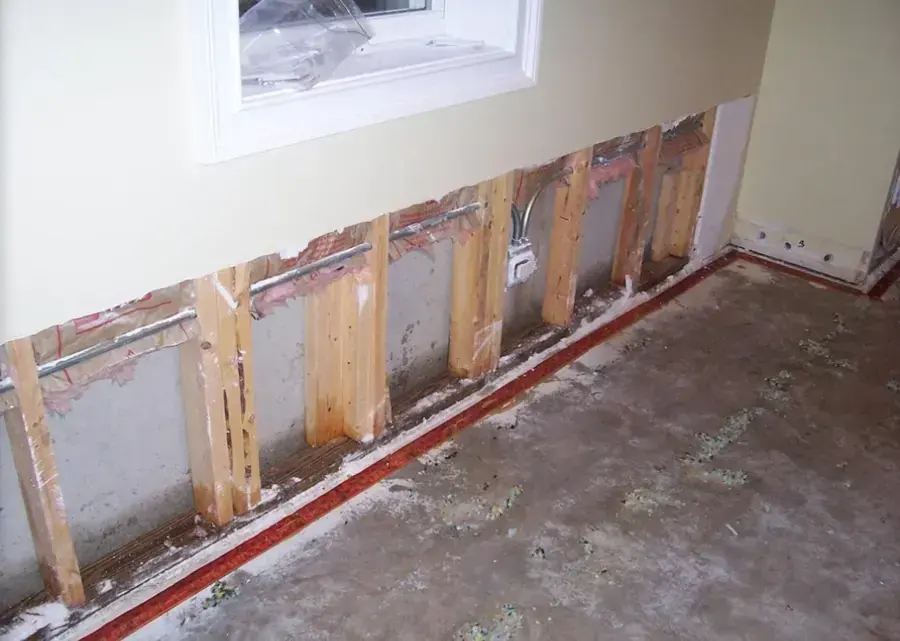
- Removed: carpet, pad, lower drywall and insulation that touched sewage.
- Cleaned and treated: concrete, framing and hard surfaces, with an EPA-registered antimicrobial.
- Contents: porous items are discarded, and hard items are cleaned.
- Air: HEPA air scrubbers run during the work to catch airborne particles.
Records to gather before the calls
A short written record makes the calls to the district and to the cleanup crew faster. The Sandy water damage restoration pages show the other services that follow a backup.
- When the backup was noticed and which fixtures were affected.
- Photographs of the water level and the damage.
- What was done first: water use stopped, cleanout checked.
- The district's answer and the name of the person who gave it.
Sump pumps and drains never go into the sewer
Jordan Basin says sump pumps, French drains and other flood control systems must never be connected to the sanitary sewer. A pump that discharges there adds storm water to a system built for household waste.
After a storm, a basement that floods from the outside is a different problem from one that fills from a drain. The two need different help: the sewer district for a backup, and a restoration crew for the water that is already inside.
Questions
Which sewer district serves a Sandy address?
It depends on the address. One district serves a majority of the city and another serves the southern portion, and the district can confirm whether an address is in its area.
Is the sewer lateral the homeowner's responsibility?
The larger district says the lateral is privately owned and has always been the homeowner's to fix. Jordan Basin says it is responsible only for its own main.
Does the Sewer Lateral Program cover earthquakes?
No. It covers many causes, including improper maintenance or construction and floods, landslides and sinkholes, but not earthquakes.
Why is sewage cleanup different from a water leak?
Sewage is Category 3 water, so porous materials that touch it are removed, not dried, and the area is cleaned and treated.
What did South Valley Sewer District become?
Jordan Basin Improvement District, renamed in June 2024.
What should be done first when a drain backs up?
Stop all water use, note which fixtures are affected, and call the district that serves the address. The cleanup crew can start on the water that has already come up.