Basement Flooding Cleanup in Sandy, UT
A basement that took on storm runoff or a split pipe needs the water pumped out and the concrete, framing and drywall dried to measured targets, with every step documented for the insurance claim.
(888) 558-4812Call about a flooded Sandy basement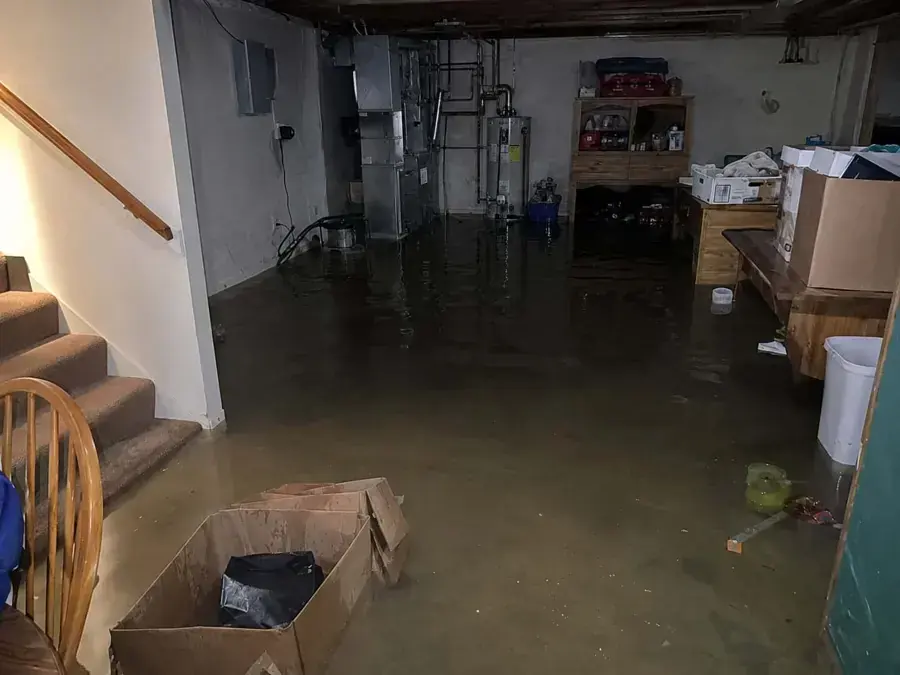
What to do first about basement flooding cleanup in Sandy
Shut off power and water
Turn off the main valve if a pipe is the source, switch off breakers to the basement, and stay out of standing water that may touch outlets.
Move what is dry
Carry boxes, rugs and electronics to dry floors upstairs, and lift furniture legs onto foil or blocks.
Name the water source
Surface water from rain, creeks or window wells is treated as contaminated, while a fresh supply leak starts clean.
Photograph first, then call
Take dated photos of the water depth and damaged contents, then call so drying equipment can be arranged.
How basement flooding cleanup is handled in Sandy, UT
Walkthrough and moisture map
A tech checks water depth, finds the source, and maps wet concrete, framing and drywall with meters and a thermal camera.
Extraction
Truck-mounted pumps and wands pull standing water off the floor and out of carpet before drying begins.
Careful removal
Soaked pad and lower drywall come out, with flood cuts set above the wet mark.
Dry, log and verify
Dehumidifiers and air movers run while daily readings are logged, and equipment leaves once targets are met.
What does basement flooding cleanup cost in Sandy, UT?
A Sandy basement flood usually costs $2,000 to $25,000, set by how much carpet and drywall must come out and whether the water was clean, gray or contaminated. Written scopes follow the first readings.
Small or bare basement
- Water pumped and extracted
- Boxes and rugs moved out
- Readings every day
Finished room, clean water
- Pad and lower drywall removed
- Bottom plates and studs dried
- Equipment in several rooms
Sewage or flood water
- Porous materials removed and bagged
- Containment and HEPA scrubbers
- EPA-registered antimicrobial
These are typical ranges, not a quote. The water category, the square footage, the material class and how fast drying started move the number most. For a closer planning range, run the water damage cost calculator.
Basements in Sandy take on water in a few distinct ways, and the way decides the work. A cloudburst, a creek, a split pipe and a sewer backup each leave a different mess behind.
Basement flooding cleanup after storms
The August 13, 2026 storm is the clearest recent example of the pattern.
- Rain overwhelmed the city's pipe system, popped manhole covers, stranded drivers and flooded basements that Thursday evening.
- Cars were trapped in hip-deep water at 1300 East near 10600 South, and that road stayed closed.
- Broken windows and filled window wells let water into basements without any pipe failing.
How basement flood cleanup works
Crews begin by pumping and extracting standing water, then lift carpet and pad, which rarely dry in place once soaked. Lower drywall is cut above the wet mark so the cavity can be opened to air. Concrete, bottom plates and studs are dried with air movers and LGR dehumidifiers, and readings are taken every day until the structure matches a dry reference. Anything touched by sewer or flood runoff is handled as Category 3 and bagged out, following EPA flooding information.
Basement flooding during creek season
In spring 2023 the City prepared for creek flooding: the mayor declared an emergency, crews spent months clearing debris, and sandbag stations were planned for Quail Hollow. That work protects streets and creeks, but it cannot keep water out of one window well, so owners still watch the wells, floor drains and sump pump. Any of those routes puts water on the concrete floor, and the cleanup starts the same way. The Sandy City flood page describes the spring runoff risk near its creeks.
Basement Flooding Cleanup questions in Sandy, UT
Is a pump used before drying starts?
Standing water goes first, using submersible pumps for depth and truck-mounted extraction for the last inch, because drying cannot start while water sits on the floor.
What if the water came through a window well?
Window well water is handled as surface water, so wet carpet and pad usually go, and the wall behind the window is checked for wicking. See window well flooding for that case.
Who is called for a sewer backup in the basement?
Call the sewer district first, since Sandy Suburban Improvement District or Jordan Basin Improvement District serves the address; then bring in a sewage backup cleanup crew for the Category 3 water.
How long until the basement is dry?
Concrete and framing usually take three to five days, and thick materials can take longer. The tech returns daily to read the meters, and the equipment is removed only when readings reach the dry reference.
Can finished basement carpet be saved?
Clean water caught early sometimes lets carpet be lifted and floated, but the pad is nearly always replaced. Contaminated flood or sewage water means carpet and pad are discarded, since cleaning cannot make them safe.
What should be saved for the adjuster?
Keep dated photos, a list of damaged items, the moisture readings and the equipment log, and hold on to anything removed until the adjuster says it can go.
Basement flooding cleanup across Sandy, UT
Basement jobs run from Quail Hollow and Willow Creek, where creeks run close, to Dimple Dell, Bell Canyon, Alta Canyon and East Sandy, plus Historic Sandy and The Cairns, ZIP codes 84070, 84092, 84093 and 84094.
The same service nearby: basement flooding cleanup in Riverton, Draper, South Jordan.
Stop a flooded Sandy basement from spreading
Wet pad and drywall turn costly as they sit. A crew can extract the water, open the walls that need it and begin measured drying.