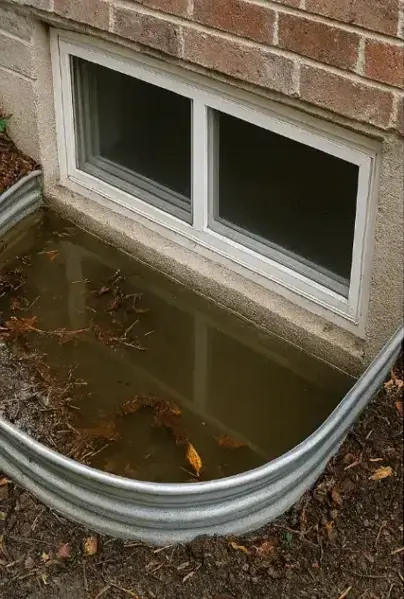
On the evening of Thursday, August 13, 2026, a fast, heavy storm hit Sandy, Utah. The mayor said the rain overwhelmed the city's pipe system, and basements flooded, windows broke and window wells filled.
Key takeaways
- The August 13, 2026 storm filled window wells and flooded basements, and the mayor said the rain overwhelmed the city's pipe system.
- Manhole covers popped, and four or five cars were trapped in hip-deep water at 1300 East near 10600 South.
- A window well that fills faster than it drains presses on the glass and the frame, so the well is the first place to check after a cloudburst.
- Water that came through streets and window wells is handled as contaminated Category 3 water, so soaked carpet, pad and lower drywall usually come out.
- The mayor said afterward that major storms rarely happen in the city, which makes the August storm stand out.
What happened in Sandy on August 13
A fast, heavy storm hit on a Thursday evening. The mayor said the rain overwhelmed the city's pipe system, popping manhole covers, stranding drivers and flooding basements.
The storm also broke windows and filled window wells. Fox 13 reported driveways underwater in Sandy and Draper neighborhoods, and flooded streets near 1300 East and Dimple Dell.
The city sits at the base of the Wasatch Mountains. Its eastern part is on the slopes of the Wasatch Range and its western part lies at the bottom of the valley, so heavy rain runs downhill and the low ground collects it.
- Roads: four or five cars were trapped in hip-deep water at 1300 East near 10600 South, and the road stayed closed for a significant period.
- Streets: manhole covers popped and drivers were stranded.
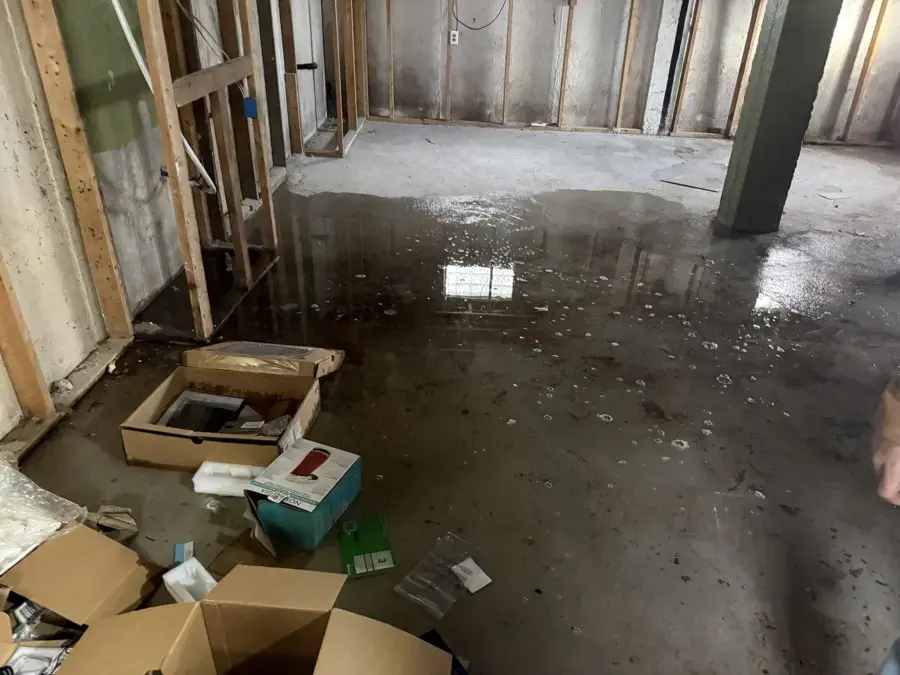
- Homes: basements flooded, windows broke and window wells filled.
Why a window well fills so fast
Window wells do quiet work most of the year, and a cloudburst is the day they are tested.
How a well is meant to work
A window well is a shallow pit around a basement window. It collects rain from the roof and the ground beside it, and it relies on a drain or loose gravel at the bottom to empty.
How it fails in a cloudburst
In a cloudburst, water comes in faster than a small drain can carry it away. Once the well is full, the water has two places to go: through a cracked or loose window, or down the wall and under it.
The window well flooding cleanup that follows is as much about the wall and floor behind the glass as about the well itself.
- Debris: leaves and dirt on the drain keep water standing in the well.
- Saturated ground: when the soil is already wet, runoff has nowhere to soak in.
- Cover gaps: a cover keeps leaves out, but water can still run in around its edges.
When the pipes are full, the streets carry the water
Sandy City Public Utilities delivers drinking water to most of the city and also manages flood control and stormwater.
When a storm overwhelms the pipe system, the water that cannot go underground moves along the pavement. It finds driveways, garage doors, stairwells and wells, and it keeps going until it reaches the lowest opening.
The mayor said afterward that major storms rarely happen in the city. A rare storm can still fill a basement in one evening, and the cleanup is the same either way.
- Streets: water ponds at low points and runs along the curb toward the next drain.
- Driveways: sheet flow runs toward garage doors and the walls beside them.
- Stairwells: walkout and basement stairwells collect it from the surrounding yard.
- Window wells: they fill from the surface and from the soil around them.
The first hours inside a flooded basement
The order of the first steps matters more than speed alone. Safety comes first, then records, then the call for extraction.
Boxes of paper, photographs and electronics are the contents most worth moving first, because wet cardboard fails quickly.
- Electrical safety: if water reaches outlets, the panel or appliances, leave the power off until an electrician has checked.
- Photographs: photograph the water level and the damage before moving anything.
- Contents: lift small items and furniture legs out of the water.
- Broken glass: cover a broken window with plastic or boards to keep more water out.
- Extraction: call early, because carpet pad soaks through quickly and walls wick water upward.
What to write down
- When: the time the water was noticed and when it stopped rising.
- Where: the window, door, stairwell or floor where it came in.
- What: the items moved and where they went, so nothing is lost in the cleanup.
Why storm water is treated as contaminated
Water from streets, driveways and yards collects soil, oil, fertilizer and whatever else lies on the ground. Restoration standards class it as Category 3, which means porous materials that soaked it up are removed.
That sorting is the core of flash flood cleanup, and it happens before any drying equipment goes in.
Not every material has to go. Concrete, framing and solid wood can be cleaned and dried, which is why a flooded basement is usually repaired and not gutted.
- Removed: carpet, pad, insulation and lower drywall that soaked up the water.
- Cleaned and treated: concrete, framing and other hard surfaces, with an EPA-registered antimicrobial.
- Sorted: contents are divided into what can be cleaned and what cannot.
Drying the basement after the water is out
Once the water and the wet materials are out, basement flooding cleanup moves to drying. Air movers and dehumidifiers run through the space, and readings are logged each day until the framing and concrete reach their drying goal.
Mold can begin to grow after 24 to 48 hours of dampness, so the first day sets the pace for everything after it.
- Readings: pinless meters and thermal imaging find water behind walls.
- Air movers: set by the evaporation load of each room.
- Dehumidifiers: pull moisture from the air so the walls can release theirs.
- Rebuilding: starts only after the readings say dry.
Window well checks before the next storm
A short check in fall costs little compared with a flooded basement. It also shows whether a well is ready for the next cloudburst, and the Sandy water damage restoration pages cover the other services for this city.
- Clear the well: remove leaves, weeds and debris, and make sure the drain is open.
- Check the glass: look for cracks and a tight seal around the window.
- Downspouts: point them away from the house and the wells.
- Grading: soil beside the well should slope away from the window.
- Stored items: keep boxes off the basement floor under windows.
Questions
What is the drain at the bottom of a window well for?
It lets rain that collects in the well soak down or flow away, so the well does not fill. If the drain is blocked, or the storm is too fast for it, the well fills like a bucket.
Is storm water in a basement clean water?
No. Water that has crossed streets, driveways and yards is handled as Category 3, so porous materials that soaked it up are normally removed.
What did the mayor say about the city's pipe system?
The mayor said the August 13, 2026 rain overwhelmed the city's pipe system, popping manhole covers, stranding drivers and flooding basements. When pipes are full, water stays on the street.
Who manages flood control and stormwater?
Sandy City Public Utilities, which also delivers drinking water to most of the city.
Can a window well cover stop the flooding?
A cover keeps leaves and debris out, but it does not seal the well. Water can still run in around the edges, and the drain still has to work.
How soon should water come out of a basement?
As soon as it is safe to enter. Carpet pad soaks through quickly, and materials that stay wet can start to grow mold after 24 to 48 hours.