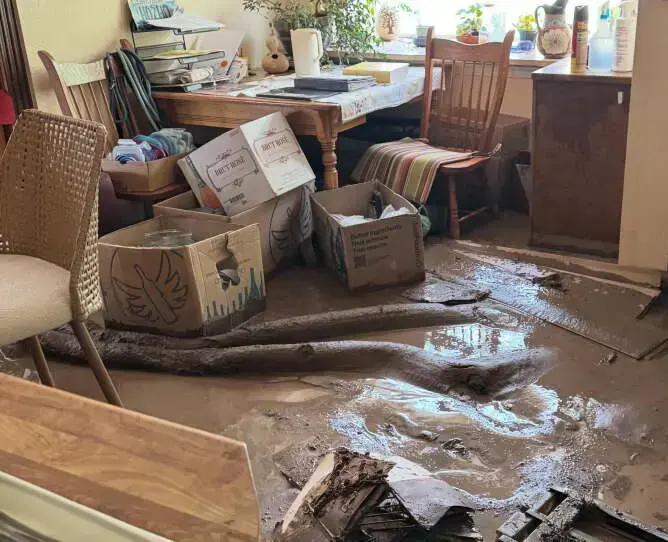
An intense monsoon storm hit Draper on August 3, 2023, and the mayor issued a state of emergency that night. Part of Bangerter Parkway washed away, and homes near a Latter-day Saints temple reported several feet of water in basements.
Key takeaways
- Monsoon moisture usually brings afternoon thunderstorms to Draper in July and August, according to Wikipedia.
- The August 3, 2023 storm washed away part of Bangerter Parkway, closed two other roads and left mud and debris as deep as two feet, according to KUTV.
- Homes near a Latter-day Saints temple reported several feet of water in basements, broken windows and mudslides.
- The City Manager said the storm brought more water than the drainage system could handle and that a blockage did not cause the flooding.
- Mud-laden floodwater is Category 3, so carpet, pad and lower drywall that soaked it up are removed, and the rest is cleaned and dried.
What the August 3, 2023 storm did
An intense monsoon storm hit the city, and the mayor issued a state of emergency that night. KUTV reported that part of Bangerter Parkway washed away, two other roads closed and piles of mud and debris reached two feet deep.
KJZZ reported that Minuteman Drive flooded with standing water, mud and debris. Residents of homes near a Latter-day Saints temple described several feet of water in basements, broken windows and mudslides.
The storm fell in the part of the year when monsoon moisture usually brings afternoon thunderstorms, July and August. A monsoon cloudburst drops a large amount of rain on a small area in a short time, so the ground cannot soak it up and drains sized for ordinary storms cannot carry it.
- Roads: part of Bangerter Parkway washed away and two other roads closed.
- Streets: Minuteman Drive flooded with standing water, mud and debris.
- Homes: several feet of water in basements, broken windows and mudslides.
- Mud: piles of mud and debris as deep as two feet.
When a drainage system is outmatched
Draper City's Storm Water Division manages the storm drain system, sweeps streets and operates more than 100 detention and retention basins.
A basin holds back runoff so the pipes downstream see it more slowly. When a basin fills, the overflow keeps moving toward the streets and low yards below it.
After the storm, the City Manager said the flooding was not caused by a blockage in the drainage system or by debris. The storm brought more water than the drainage could handle.
When a system is outmatched, the extra water moves overland: down streets, across yards and into stairwells, window wells and door thresholds. Mud rides along with it, and mud is what makes this cleanup different from a plain leak.
Mud and floodwater: why it is Category 3
Restoration crews sort water into categories, and the category decides what can be saved.
What Category 3 means
Category 3 water is grossly contaminated. Floodwater that has crossed roads, yards and hillsides carries soil, oil, bacteria and debris, so restoration standards treat it that way from the start.
That label stays with the water no matter how clear it looks once the mud settles.
Mud deserves its own mention. It is soil, and soil carries bacteria, so mud that dries on concrete, framing or contents is still contaminated and has to be cleaned off, not just swept.
What comes out and what stays
Flash flood cleanup is built around this sorting, and it happens before any drying equipment goes in.
- Out: carpet, pad, insulation and lower drywall that soaked up the water.
- Cleaned and treated: concrete, framing and other hard surfaces, with an EPA-registered antimicrobial.
- Sorted: contents are divided into what can be cleaned and what cannot.
The first day, in order
A mud and water emergency feels chaotic. A fixed order keeps people safe and keeps the damage from growing.
- Safety: stay out until the water, the power and the structure are safe, because floodwater can hide hazards.
- Power: shut off the circuits to the flooded area only from a dry panel, or leave it to an electrician.
- Photographs: capture the mark the water left on the walls, the depth of the mud and the damage before anything moves.
- Contents: move small valuables up and out of the water.
- Openings: cover broken windows with plastic or boards.
- Extraction: call early, because mud dries into a crust that is harder to remove.
How the mud comes out
Mud removal comes before drying. Crews shovel, scrape and pump it out in stages, then wash and treat the surfaces underneath.
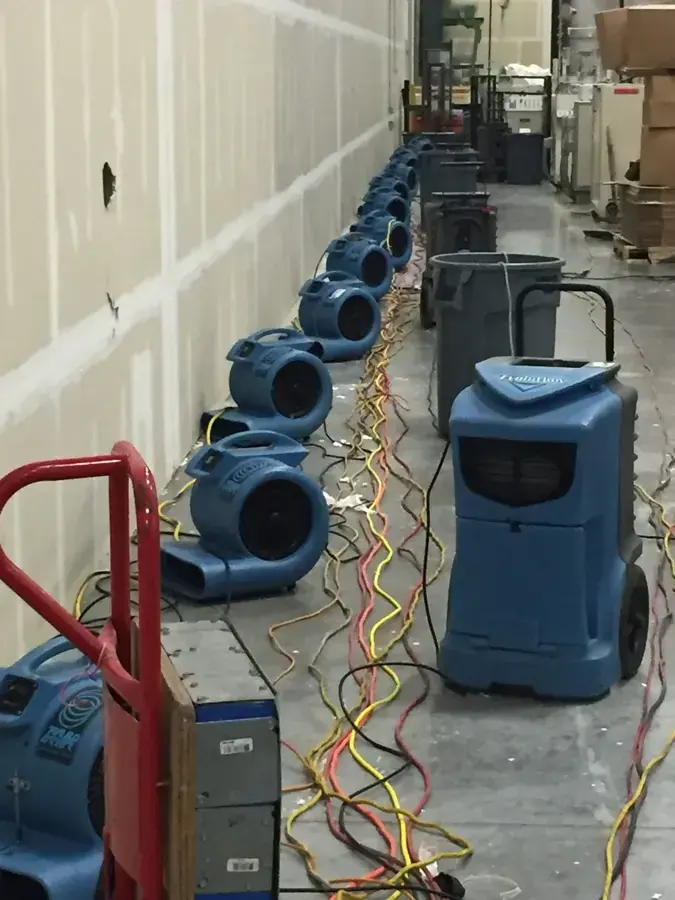
Drying the basement after the mud is out
After the mud and the wet materials are out, structural drying takes over. Air movers and dehumidifiers run through the basement, and moisture readings are logged every day.
A finished basement has more to dry: wall cavities, bottom plates and the concrete under any flooring. Basement flooding cleanup ends when readings show those layers have reached the IICRC S500 drying goal.
Equipment stays until the framing and concrete match a dry reference. How long that takes depends on how many materials got wet and how far the water traveled.
Mold can begin to grow after 24 to 48 hours of dampness, so the sooner the water and mud come out, the less drying is left.
- Readings: pinless meters and thermal imaging check walls without opening them.
- Containment: plastic sheeting keeps dust and moisture inside the work area.
- Dehumidifiers: remove the moisture that the walls and framing release.
Rebuilding after the dry-out
Once the structure is dry, rebuilding starts. Draper City's Building Division handles permits through an online portal, and its submittal checklists include one for basements.
Questions about what rebuilding work needs a permit go to the Building Division. The drying crew can document what was removed, and the division decides what the rebuild requires.
- Ask first: which parts of the rebuild need a permit.
- Keep records: the drying log and photos show what was removed and why.
- Plan the order: framing, drywall, flooring and paint go in that order, and each waits for dry readings.
Getting ready for the next monsoon
Monsoon moisture usually returns each July and August. A basement that took water once is worth checking before then, and the Draper water damage restoration pages cover the other services for this city.
- Window wells and stairwells: clear drains and debris before July.
- Downspouts: send roof water well away from the foundation.
- Sump pump: test it, if the house has one.
- Storage: keep irreplaceable items off the basement floor.
- Photos: take a set of the finished basement as a baseline.
Questions
How deep was the mud after the August 2023 storm?
KUTV reported piles of mud and debris as deep as two feet. Mud that deep is shoveled and pumped out in stages before drying can begin.
Was the flooding caused by a blocked drain?
The City Manager said no. The storm brought more water than the drainage system could handle, and a blockage or debris did not cause the flooding.
Why are mud and floodwater treated as contaminated?
They have crossed roads, yards and hillsides and carry soil and whatever lay on the ground, so porous materials that soaked them up are removed.
What does the Storm Water Division do?
Draper City's Storm Water Division manages the storm drain system, sweeps streets and operates more than 100 detention and retention basins that hold runoff back.
Which roads were affected?
Part of Bangerter Parkway washed away and two other roads closed. KJZZ reported that Minuteman Drive flooded with standing water, mud and debris.
When does mold start after a flood?
It can begin to grow after 24 to 48 hours on materials that stay damp, which is why the pad, lower drywall and standing water come out first.