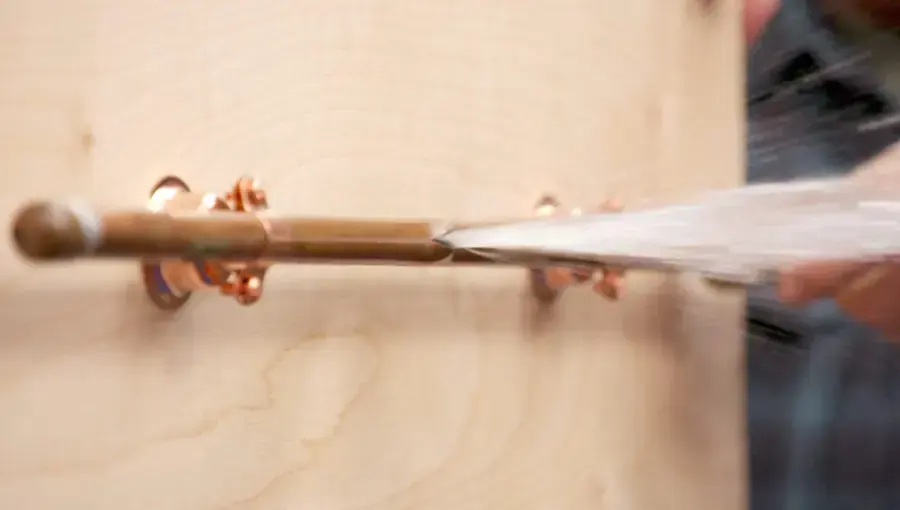
After a pipe leak, two jobs start at once: drying the house and sorting out the repairs. Bluffdale posts a list of work that needs no permit, and the difference between stopping a leak and replacing a pipe is where most of the questions land.
Key takeaways
- Bluffdale's posted exempt-from-permit list says stopping leaks in drain, water, soil, waste or vent pipe needs no permit.
- Replacing a defective concealed pipe with new material is new work that needs a permit and inspection, according to the same list.
- Clearing stoppages, repairing leaks in pipes, valves or fixtures, and removing and reinstalling toilets are exempt only when no valves, pipes or fixtures are replaced or rearranged.
- Finish work such as painting, papering, tiling, carpeting, cabinets and counter tops is exempt from a building permit.
- Finishing a basement runs through the Building Department's own permit process, with a 2025 requirements sheet that covers floor plans and window wells.
Drying comes first, repairs come second
The first days after a leak go to stopping the water, extracting it and drying the structure. Repairs wait until the moisture readings show that the framing and subfloor are dry.
That gap is useful. It gives an owner time to ask what the repairs need before anyone cuts into a wall or orders materials.
A dry-out is not a repair, and a repair is not a dry-out. Keeping the two apart makes the permit questions easier to ask and the answers easier to follow.
Burst pipe cleanup and structural drying cover the first stage, and the City's list governs much of the second. The drying crew documents what was removed, and the Building Department answers the permit questions.
- Stop: shut off the water and extract what is standing.
- Dry: air movers and dehumidifiers run while readings are logged.
- Repair: pipe and finish work begin once the readings show dry.
What the City's posted list covers
The posted exempt-from-permit list is the reference for most leak questions. It sorts work into what needs no permit and what counts as new work.
Stopping and fixing leaks
The list says stopping leaks in drain, water, soil, waste or vent pipe needs no permit.
It also exempts clearing stoppages, repairing leaks in pipes, valves or fixtures, and removing and reinstalling toilets. The condition is that no valves, pipes or fixtures are replaced or rearranged.
Toilets and fixtures
Toilets are often pulled during a dry-out, because water collects under the base. Removing and reinstalling a toilet is on the exempt list, as long as no valves, pipes or fixtures are replaced or rearranged.
Finish work
The same list exempts finish work from a building permit. After a dry-out, finish steps like these make up the visible part of the rebuild.
- Painting and papering.
- Tiling and carpeting.
- Cabinets and counter tops.
When a repair becomes new work
The list draws a clear difference. Replacing a defective concealed pipe with new material is new work, and it needs a permit and an inspection.
Take a leak in a pipe behind a bathroom wall. Stopping the leak needs no permit under the list, but replacing the failed section with new pipe is new work for a concealed pipe, and that part needs a permit and inspection.
The Building Department is the place to confirm which side of that difference a given repair falls on. Work that needed a permit and did not get one can raise questions during a later sale or renovation.
- Is the work stopping a leak, or replacing a pipe?
- Will any valves, pipes or fixtures be replaced or rearranged?
- Is any of the new pipe going into a wall or other concealed space?
Finishing a basement after water damage
The Building Department runs a separate permit process for finishing a basement, with a 2025 requirements sheet that covers floor plans and window wells.
That process is about finishing work, not drying. The question tends to come up when a flooded basement is stripped to the studs and the owner is deciding how to rebuild it.
Whether rebuilding the same layout needs the process is a question for the Building Department, and so is any work the list does not name, such as rebuilt walls. A basement flooding cleanup leaves the room dry and ready for that conversation.
- Floor plans: part of the City's basement requirements sheet.
- Window wells: the sheet covers them as well.
- Original layout: ask whether rebuilding the same plan changes the answer.
Spotting leaks early with the City's water tools
Bluffdale City offers the Neptune 360 Water Dashboard, available from June 1, 2025. It shows daily water use and alerts, and it helps detect leaks early.
A leak that runs inside a wall can show up in daily water use before it shows up as a stain. Checking the dashboard after a long weekend away is a quick way to catch one.
Moisture meters and thermal imaging do the same job inside a wall once a leak has started, finding water without opening the drywall.
Who else is involved in a leak
About 74 percent of Bluffdale housing units were built in 2000 or later, and the median home was built in 2011. Age is not the main story, because hoses, fittings and appliance connections fail in newer houses too.
About 77 percent of occupied homes are owner-occupied and about 23 percent are rented. About 64 percent of housing units are detached single-family homes, about 21 percent are attached homes such as townhomes and about 15 percent are in buildings with two or more units, so a leak can involve a landlord or a neighbor.
- Landlords: tell them early when the leak is in a rental, so repairs and drying stay on one schedule.
- Neighbors: in a shared building, check the ceiling and walls next door.
- Plumbers: ask whether the work is a leak repair or new pipe before it starts.
Records worth keeping
Permit questions are easier to answer with the paperwork in hand. The Bluffdale water damage restoration pages list the other services that produce records of their own.
- Photographs of the leak, the wet materials and the dry-out.
- Daily moisture readings and the equipment list.
- Receipts and permit paperwork for any new pipe.
- Dates: when each stage of the work started and finished, and who did it.
- The Building Department's answer, in writing, whenever a question was asked.
Questions
Does stopping a leak in a drain pipe need a permit in Bluffdale?
The City's posted exempt-from-permit list says stopping leaks in drain, water, soil, waste or vent pipe needs no permit.
Does replacing a pipe inside a wall need one?
Under the same list, replacing a defective concealed pipe with new material is new work that needs a permit and inspection.
Do paint, carpet and cabinets need a building permit?
The list exempts finish work such as painting, papering, tiling, carpeting, cabinets and counter tops from a building permit.
What about finishing a basement?
The Building Department has its own basement-finish permit process, with a 2025 requirements sheet covering floor plans and window wells.
Who confirms whether a specific repair needs a permit?
The Building Department. The list sets the general rule, and the department can say which side of it a given repair falls on.
Can a leak be spotted before a wall stains?
Daily water use in the City's Neptune 360 Water Dashboard can show a leak early. Moisture meters and thermal imaging find water that is already inside a wall.