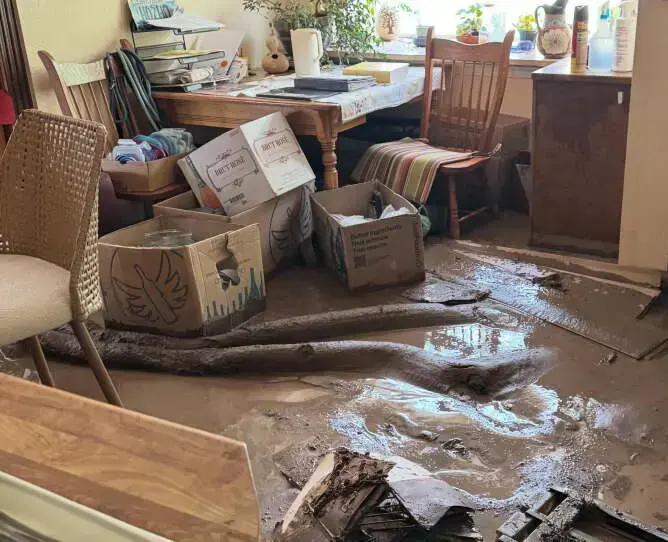
Midas Creek runs along Riverton's north boundary and Rose Creek along its south boundary, and a summer cloudburst can send water down both. When that water reaches a house, it usually comes in through a window well, a stairwell or a door.
Key takeaways
- Midas Creek forms the north boundary of the city and Rose Creek the south boundary, and Rose Creek flows only after storms.
- A March 2020 county study says the storm drains here are designed for a 10-year storm, so bigger storms send water along the streets.
- On June 24, 2021 a thunderstorm pushed floodwater and mud down dry creek beds in Herriman and into Riverton, and at least one home had basement flood damage.
- Runoff that has crossed streets, yards and creek beds is Category 3 water, so soaked carpet, pad and lower drywall are usually removed instead of dried.
- Window wells, stairwells and basement doors are the usual ways in, which makes them the first places to check after a storm.
Two creeks and a street grid
Midas Creek forms the city's north boundary and Rose Creek forms its south boundary, and both cross the city from west to east. The Jordan River lies along the east side.
Rose Creek is an ephemeral stream. It flows only after storms, carrying runoff from Rose Canyon in the Oquirrh Mountains toward the Jordan River.
That makes it the major storm outfall for parts of Herriman, Riverton and Bluffdale. Between storms the channel is dry, so the risk is easy to forget.
The weather pattern adds to it. The area averages about 16 inches of precipitation a year, with cold winters, spring snowmelt and summer cloudbursts.
- Midas Creek: the north boundary of the city.
- Rose Creek: the south boundary, running only after storms.
- Butterfield Creek: remnants east of Redwood Road.
- Jordan River: the east side, where the river bottoms sit.
What a 10-year storm design means for the streets
A March 2020 Salt Lake County Flood Control study says the storm drains in Herriman, Riverton and Bluffdale are designed for a 10-year storm. Most of them lack the capacity for a 100-year storm.
Drains sized that way handle the common storms. In larger storms, the streets with curb and gutter become the major storm water route.
Water that cannot get into a drain keeps moving along the pavement toward the lowest ground it can find. That ground is often a driveway, a stairwell or a window well.
- Driveways: a slope toward the garage door sends street water straight to the threshold.
- Stairwells: a walkout or basement stairwell collects water from the yard around it.
- Window wells: a well fills fast when the ground beside it is already soaked.
June 24, 2021: dry creek beds that did not stay dry
On June 24, 2021 a thunderstorm sent floodwater and mud down dry creek beds in Herriman and into Riverton. An Urban and Small Stream Flood Advisory was in effect, and Herriman City posted video of floodwater raging along Midas Creek.
KSL reported at least one home with basement flood damage, plus a detention pond and a park filled with water, mud and debris. One neighbor blamed debris that had built up over the years.
The City told residents to stay away from dry creek beds until the water receded. A creek bed that looks harmless on a dry day is still a channel built to carry water.
The flash flood cleanup page for Herriman covers the same kind of storm in that city.
- Creek beds: stay out while any water is moving, and until the channel has fully drained.
- Detention ponds: keep children and pets away after a storm.
- Streets: do not drive or wade through moving water, because the depth is hard to judge.
How storm water gets into a house
Riverton's housing stock is mostly two-story homes and ramblers with full basements, and many of those basements are finished. That puts carpet, pad and framing in reach of any water that finds a way down.
Window wells
A window well fills when surface water has nowhere else to go, and a well packed with leaves and weeds drains slowest. Once it is full, the water presses on the glass and the frame.
A cover keeps leaves out but does not seal the well, so water can still run in around the edges.
The cleanup for a flooded well starts with window well flooding cleanup, because the room behind the wall has to be checked as well as the well.
Doors, stairwells and garages
Walkout doors, basement stairwells and low garage entries take water from another direction. Once it is inside, it spreads under baseboards and soaks the lower drywall.
A finished basement hides the spread. Water can travel along a wall cavity well past the spot where the carpet feels wet, and carpet pad holds it like a sponge.
The first day after storm water gets inside
Water that has crossed streets, yards and creek beds is not clean. It is handled as Category 3, and that decides what can be saved.
Shutting off the main water valve does nothing for storm water, so the priorities are power safety, photos and extraction.
- Safety: stay out of deep water, and keep the power off to any area where water touches outlets or appliances.
- Photos: photograph the water level and the damage before anything is moved.
- Contents: lift small valuables and furniture legs out of the water.
- Vacuum: skip the household vacuum, which is not made for water.
- Extraction: call early, before the pad soaks through and the walls wick water upward.
What cleanup and drying involve
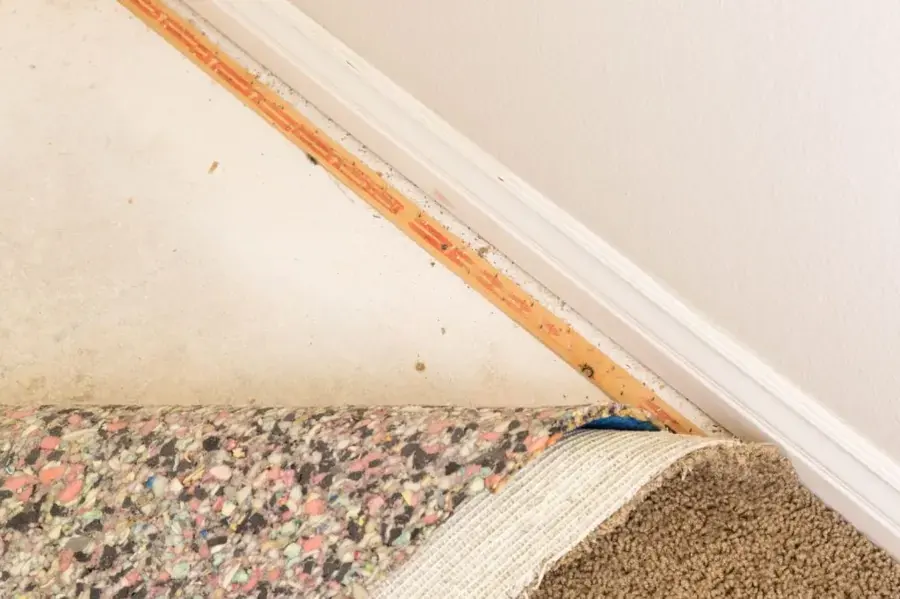
A restoration crew pumps out the water and mud first. Carpet, pad and lower drywall that soaked up Category 3 water are removed rather than dried in place, because they hold contamination.
Flash flood cleanup covers the mud and storm runoff, and basement flooding cleanup covers the finished rooms below. Hard surfaces and framing are cleaned and treated with an EPA-registered antimicrobial, and contents are sorted into what can be cleaned and what cannot.
Air movers and dehumidifiers then run while moisture readings are logged each day. Thermal imaging and pinless meters find water that is still inside a wall after the surface looks dry, and the equipment stays until the structure reaches its drying goal.
Mold can begin to grow after 24 to 48 hours of dampness, so the order matters: water out, wet materials out, then drying.
Before the next cloudburst: a short checklist
None of this stops a big storm, but a few habits slow the water before it reaches the house.
- Window wells: clear leaves, weeds and debris from the well and its drain.
- Downspouts: point them away from the house and away from window wells, as South Jordan City advises.
- Grading: slope soil and landscaping away from the foundation and the wells.
- Storm drains: clear leaves from the inlets near the house.
- Storage: keep boxes and electronics off the basement floor.
Questions
Is Rose Creek always flowing?
No. Rose Creek is an ephemeral stream that flows only after storms, running from Rose Canyon in the Oquirrh Mountains toward the Jordan River.
Why do streets carry storm water when there are storm drains?
A March 2020 county study says the storm drains are designed for a 10-year storm. In larger storms the streets with curb and gutter become the major route for the water.
Who is contacted when a creek is the source of flooding?
Herriman City's flood page says to contact Salt Lake County Flood Control when flooding comes from a river, creek, stream or canal. Water that has already reached a house is a separate job for a restoration crew.
Is storm runoff in a basement clean water?
No. Water that has crossed streets, yards and creek beds is handled as Category 3, so soaked carpet, pad and lower drywall are normally removed.
How fast does the water need to come out?
As early as it is safe. Wet materials can start to grow mold after 24 to 48 hours, and extraction keeps the damage from spreading into the walls.
What should be photographed before cleanup starts?
The water level on the walls, the damaged contents and the path the water took in. Photos taken before anything is moved give the owner and the cleanup crew the same picture.