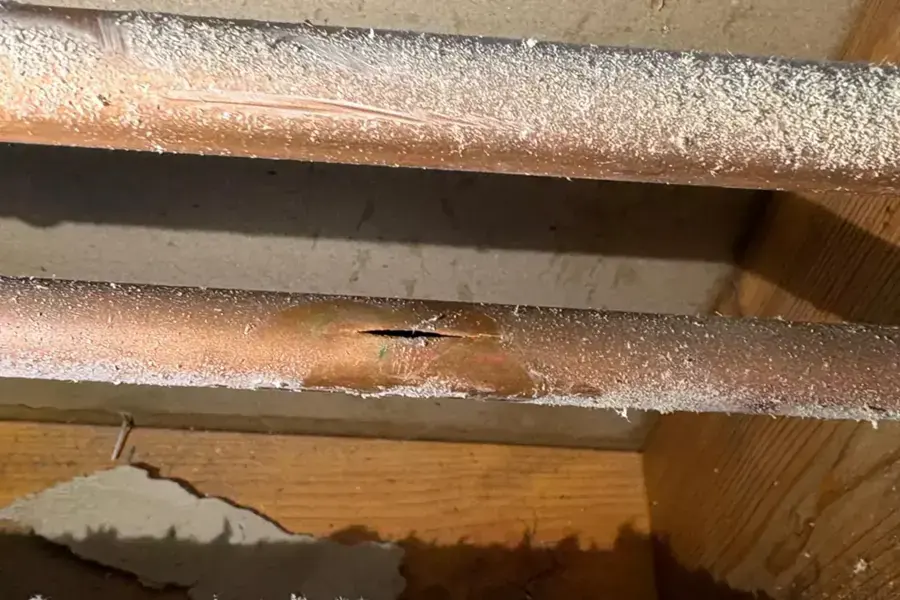
Riverton winters bring hard freezes and snow, and the first deep cold tends to find the pipes that were never protected. October is the easy time to walk the house, before a hose bib or a garage wall pipe splits.
Key takeaways
- Pipes in outside walls and garages, and at hose bibs, are where freeze splits turn up in Riverton homes.
- A frozen pipe often splits, but the water only shows when the ice thaws, so the damage can sit hidden inside a wall.
- South Jordan City says an eighth-inch crack in a pipe can let out up to 250 gallons of water a day.
- Sandy City took about 40 frozen pipe calls in one day, January 31, 2023, and its utilities director asked homeowners to let faucets run a pencil length of cold water overnight or while away.
- Knowing where the main shutoff is, and making sure everyone in the house can reach it, does more than any repair afterward.
Where Riverton pipes freeze first
Freeze splits in Riverton homes turn up in pipes that run through outside walls and garages, and at hose bibs. Those are the places where winter air can reach pipe that has no heat around it.
The housing stock is mostly two-story homes and ramblers with full basements, many of them finished, and most were built from the 1990s through the 2010s. A newer house still has cold spots, because a pipe against an exterior wall is exposed no matter how recent the framing is.
Neighboring Draper gives a sense of the season. Snow usually falls regularly there from November through March, according to Wikipedia, which makes October the last easy month for a check.
- Hose bibs: the outdoor faucet and the short run of pipe behind it.
- Outside walls: kitchen and bath supply pipes that sit against exterior framing.
- Garages: any supply or drain pipe that crosses an unheated space.
A fall walk through, spot by spot
A flashlight and an afternoon are enough. The goal is to find every place where cold air can touch a pipe.
Outside the house
- Hose bibs: unhook every hose, and shut off the inside valve to the outdoor faucet if the house has one.
- Siding gaps: seal openings where pipes pass through an exterior wall.
- Sprinkler system: have the irrigation system winterized before the first hard freeze.
Garage and unheated rooms
- Exposed pipe: wrap or insulate it, as South Jordan City advises for garages, crawl spaces, unfinished basements and attics.
- Garage door: keep it closed on freezing nights.
- Water heater area: look for drafts around the tank and its pipes.
Kitchens and baths on outside walls
- Cabinet doors: open the doors under a sink on an outside wall during a cold snap, so room heat reaches the pipes.
- Thermostat: keep the heat on at a steady setting, including when the house is empty.
Why damage shows up at the thaw
Water expands as it freezes. The ice plug blocks the pipe, and pressure builds between the plug and a closed faucet until the pipe wall gives.
Nothing leaks while the ice holds. The water appears when the temperature climbs and the ice melts, which is why a split in an outside wall can run for a long time before anyone sees it.
- No water, or a weak flow, at one faucet on a cold morning.
- Frost or a bulge on an exposed pipe.
- A drip, a hiss or a running sound inside a wall after a warm up.
- A damp ceiling or wall that was dry the day before.
What a small crack can do
South Jordan City warns that an eighth-inch crack in a pipe can release up to 250 gallons of water a day. In an empty house, that is enough to soak a wall, the ceiling below and the floor beneath before anyone returns.
Sandy City gives a sense of how a cold snap adds up. On January 31, 2023, city officials said they had taken about 40 calls about frozen pipes in one day, something they had not dealt with in a while.
The city's Public Utilities director asked homeowners to let faucets run a pencil length of cold water overnight or while they are away.
The frozen pipe water damage page for South Jordan covers the same problem next door.
- First stop: the wall cavity around the split, where insulation holds water.
- Second stop: the ceiling or floor directly below the wall.
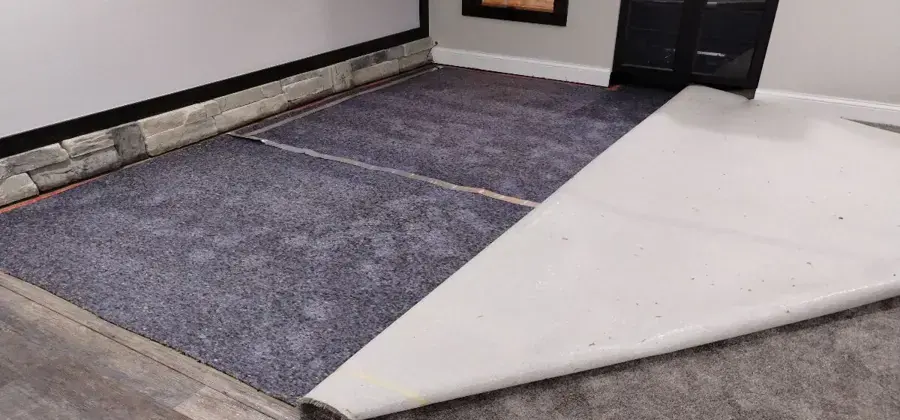
- Third stop: the basement, where water ends up in carpet, pad and framing.
If a pipe freezes or splits
Speed matters more than neatness. Two different situations call for two different sets of steps.
Frozen but not split
- Faucet: open it so water can flow as the ice melts.
- Heat: warm the pipe gently with a hair dryer, a heating pad or warm towels, working from the faucet back toward the frozen section.
- Flame: never use an open flame or a torch.
- Bulge or leak: if the pipe already bulges or drips, shut off the main and call for help.
Split and leaking
- Main valve: shut it off first.
- Drain: open a faucet at the lowest level to empty the pipes.
- Power: switch off the circuits to wet areas if that is safe.
- Photos: photograph the split, the wet areas and damaged belongings.
- Calls: a plumber for the pipe and a restoration crew for the water.
Cleanup after a freeze split
Water from a split supply pipe starts out clean, but it soaks insulation, drywall and framing quickly. A split in an upstairs wall often means a wet ceiling below it, and a finished basement can take water from both.
Frozen pipe water damage work starts with water extraction, then moisture readings show which walls are wet. The crew opens the wall where readings stay high and removes insulation and drywall that cannot dry in place.
Air movers and dehumidifiers run until the readings match a dry reference. Burst pipe cleanup ends with a record of those readings, not with the first dry-looking day, and mold can begin to grow after 24 to 48 hours of dampness.
Habits for cold snaps and trips away
Pipes are most at risk during a long cold stretch and when a house sits empty. A heating failure is the other danger, because outside walls cool quickly and the pipes inside them follow.
- Steady heat: a warm room does not protect a cold wall, so the thermostat should stay set during a trip.
- Neighbor check: ask someone to look in during a long cold spell, and show them the main shutoff.
- Heat failure: if the furnace stops during a hard freeze, open cabinet doors and let a faucet run.
- Shutoff tag: put a tag on the main valve so anyone can find it quickly.
Questions
Which pipes freeze first in a Riverton house?
Pipes in outside walls and garages, and at hose bibs, anywhere winter air reaches a pipe. Pipes inside heated interior walls are better protected.
Is a frozen pipe the same as a burst pipe?
No. A frozen pipe is blocked by ice. A burst pipe has split, and freezing can cause both, with the leak starting when the ice thaws.
Does letting a faucet run help?
A slow flow keeps water moving through a pipe that is at risk, which makes freezing less likely. Sandy's Public Utilities director asked homeowners to do this overnight or while away during the January 2023 cold.
How is water found behind a wall?
Moisture meters and thermal imaging show where a wall is wet without opening it, and small test openings confirm what the instruments suggest.
How long does drying take after a freeze split?
It depends on how many materials got wet. Equipment stays until the daily readings match a dry reference, which is often several days.
What if the pipe splits while no one is home?
A split can run for days, which is why a neighbor who knows the main shutoff is worth arranging before a trip. For a long absence in deep cold, shutting off the main and draining the pipes is safer than waiting.